Avoiding the High Cost of Emergency AC Repair Near South Towne
South Towne summer heat is not gentle on air conditioners. When July hits 95 to 100 degrees along the I-15 corridor by South Towne, systems that ran fine in June start short cycling, tripping breakers, or losing cooling capacity during the hottest part of the afternoon. That is when homeowners face the 24 hour AC repair service most expensive version of AC repair: emergency service on the hottest day of the year with limited parts availability and a system that has already been pushed past its limits. This article explains what drives those failures near South Towne, how to prevent them, and how a disciplined diagnostic process keeps repair costs under control for those who need AC repair in Sandy UT.
Why this area sees more AC emergencies than most Wasatch Front neighborhoods
Sandy sits at roughly 4,450 to 4,800 feet. Air is thinner at this elevation. Air conditioners produce 2 to 3 percent less capacity for every 1,000 feet above sea level. That means a 4-ton unit near South Towne is only delivering about 3.6 to 3.7 tons of real cooling at peak load. In a heat wave, that reduced capacity forces longer run times. Long cycles at high head pressure cook capacitors, stress contactors, and push compressors to their thermal limit. This is why so many emergency AC calls near 10600 South and State Street turn out to be failed capacitors, overheated compressors, or low refrigerant charge uncovered under peak load.
Dust load also matters here. Construction along the I-15 corridor, parking lot debris around South Towne Center, and roadside particulates collect on condenser coils. A dirty condenser in this climate adds 10 to 20 degrees to condensing temperature under load. Head pressure rises, current draw spikes, and the system edges closer to a lockout or thermal trip. Combined with altitude derating, even a slightly fouled coil can tip a marginal system into an emergency failure on a 98-degree day.
Local operating realities that drive emergency costs
Emergency costs are not just about after-hours rates. They come from compressed decision windows, parts sourcing on a hot day when suppliers are backlogged, and diagnosing a system while it is in distress. Near South Towne, the hottest hours arrive between 3 and 6 p.m. When a system fails then, condenser fan motors and dual capacitors sell out at the distributor off 9000 South quickly. If the right microfarad rating or motor frame is out, a homeowner faces either a temporary fix or a second trip later, which increases total cost. When a system is short cycling in the driveway off Sego Lily Drive, a rushed charge check without altitude-adjusted targets can lead to an overcharge, which harms the compressor and sets up another failure. The fastest path is not always the least expensive path.
Failure patterns Western technicians see near South Towne
Three patterns dominate emergency AC repair near South Towne. First, failed capacitors under high ambient heat. The signature is a humming condenser, fan not spinning, or a blade that starts with a push then stalls. Microfarad readings come in 10 to 30 percent low. Second, systems low on refrigerant due to slow leaks at flare connections, service valves, or coil seams, which do not trigger symptoms until the hottest week. Superheat and subcool numbers go out of range, and suction lines frost near the service valves. Third, restricted airflow from dirty filters and matted indoor coils on older return setups in split-level homes west of State Street and east toward the bench. The blower amps exceed nameplate, the evaporator coil ices up, and the system trips on low pressure or shuts down on a melted ice block that overflows the condensate pan.
Each pattern has a different cost curve. A capacitor and contactor fix can be same-day and economical if the correct rating is on the truck. A low refrigerant system must be leak-checked and corrected before charging, or the same emergency repeats in a week. A frozen coil requires thawing, drain service, filter changes, and then corrected airflow metrics. Western technicians apply altitude-adjusted pressure charts and temperature targets to decide which path prevents repeat calls without inflating the ticket.
How to avoid the premium that heat wave emergencies command
Prevention in this corridor is mostly about restoring margin. Systems that skate by at 90 degrees fall over at 98. Margin comes from clean coils, accurate charge, correct airflow, and verified electrical components. A clean condenser drops head pressure. Accurate charge set by superheat and subcool at altitude protects the compressor. Correct airflow set by static pressure and proper filter sizing preserves the evaporator coil. Healthy capacitors and contactors prevent hard starts and welding under high load. When these four are in range by early June, emergency rates and parts backlogs rarely enter the picture for the rest of the summer.
For homes near South Towne with older ductwork or undersized returns, margin can also come from small upgrades. A high MERV filter in a restrictive 1-inch slot can choke airflow. Swapping to a 4-inch media cabinet sized for the blower, combined with a return drop correction or additional return, can cut static pressure by 0.2 to 0.3 inches of water column. That reduction often moves the system out of the danger zone during peak afternoon hours and prevents coil freeze-ups that drive emergency calls.
Altitude-adjusted diagnostics prevent repeat failures
The single most shareable data point for Wasatch Front homeowners is this: at Orem’s 4,775-foot elevation, a central AC loses about 14 to 15 percent of its nameplate capacity. Sandy’s elevation sits within a similar band, generally 12 to 14 percent loss depending on the specific street elevation. That loss affects the diagnostic targets. A technician charging a system near South Towne has to read superheat and subcool against altitude-adjusted pressure-temperature tables, not sea-level charts printed on a generic magnet. A five-degree miss on subcool in this elevation can be the difference between a compressor living through August or locking out on high pressure on the first 100-degree day.
Western’s diagnostic approach in Sandy pairs refrigerant pressure checks with measured superheat and subcool and verifies readings against Utah Valley altitude tables. The team tests capacitors with a true microfarad meter, not a visual guess. They measure compressor and blower motor amperage draw and compare the values against data plate ratings. They check coil temperature split, not just a quick hand test on the supply vent. They record total external static pressure with a manometer and verify that the blower is moving the air the coil was designed to see. These steps make the difference between a fix that holds and a fix that sets up the next emergency.
What high head pressure does to South Towne systems
High head pressure on a hot afternoon kills components in sequence. The capacitor weakens from repeated hard starts. The contactor pits and welds. The condenser fan motor overheats and slows under load, which raises head pressure further in a loop that ends at a compressor lockout or thermal trip. On R-410A systems, pressures can climb above 400 psi in peak conditions with a dirty coil. If the system was marginally charged in spring without a proper subcool target, that pressure spike arrives sooner. When the compressor hits thermal cutoff at 5 p.m., the house warms to 80 plus degrees and the emergency call goes in. Breaking that loop requires clean coils, a confirmed charge, correct fan speed, and the right microfarad support for the motor windings.
South Towne housing stock patterns that change the repair plan
Split-level and two-story homes near 10600 South and Monroe Street often run long upstairs duct runs with returns shared across floors. These ducts see elevated static pressure in heat waves. The symptom is a cold basement, hot upstairs, and weak airflow at the far bedrooms. Without solving the airflow limits, repeated refrigerant or capacitor fixes will not cure upstairs comfort issues. In contrast, newer townhomes closer to the TRAX station near 9000 South often use compact duct systems with tight filter slots and high MERV filters. Those systems ice up when the filter loads with dust sooner than expected in late June. The repair approach adjusts by archetype, not just by symptoms.
For homeowners on the east bench where afternoon temperatures run a few degrees cooler, long morning runtimes in shaded conditions can still produce coil freeze under low airflow. That is why an airflow check belongs in every repair diagnostic in Sandy. Western technicians read static and temperature split on every emergency AC repair near South Towne before adding refrigerant or condemning compressors.
What changes in 2025 and 2026 refrigerant handling mean for Sandy homeowners
The refrigerant market is in transition. Legacy systems use R-410A. New equipment lines are moving to A2L refrigerants such as R-454B with lower global warming potential. A2L refrigerants have different charging characteristics and require specific handling and leak repair procedures under EPA Section 608 rules. Homeowners do not need to convert existing systems, but they do need a contractor trained on both R-410A and A2L safety and charging practices so that repair decisions today do not limit replacement options tomorrow. Western technicians carry EPA Section 608 certification and use recovery and charging tools compatible with both refrigerant categories. That matters if a system needs a coil replacement now and a full changeout in a year or two, especially when matching existing line sets and verifying that the repair supports the next system’s refrigerant.
Why skipping a spring check near South Towne raises July repair bills
Emergency repair costs track to two simple variables near South Towne. First, the system’s head pressure margin at 4 p.m. On a 98-degree day. Second, the supply chain load at the local distributors in Sandy and Midvale. A spring AC tune-up that includes condenser coil cleaning, confirmed superheat and subcool, a verified microfarad reading on the capacitor, a blower amp draw check, and a static pressure measurement resets that head pressure margin. It also spots failing parts when shelves are stocked and service windows are open. In Western’s Orem home base and along Utah County zip codes 84057, 84058, 84097, and 84059, this same pattern cuts emergency calls by a wide margin. The same applies to Sandy zip codes 84070 and 84094 around South Towne.
Many homeowners assume their system is fine because it cooled last season. At this elevation and in this dry climate, condenser coils can look clean from a distance and still be matted with fine particulates that block airflow. A coil that is 20 percent blocked can add enough head pressure to push a marginal capacitor over the edge by July. Cleaning it in March or April cuts emergency odds in half for many systems in this corridor. That is not sales talk. It is the thermal math of condensing temperature and motor current draw at altitude.
Common misdiagnoses that cost Sandy homeowners money
Several errors show up repeatedly in emergency repairs along the South Towne corridor. One is charging to a fixed pressure number instead of targeting subcool or superheat based on the metering device and altitude. Another is condemning a compressor when the real problem is a weak run capacitor producing a low locked rotor amps condition that disappears after replacement. A third is replacing a blower motor when the true issue is high external static pressure from a clogged filter or undersized return. Each mistake adds hundreds to a bill and does not fix the failure chain. Western’s procedure prevents these errors by verifying electrical health, refrigerant charge, and airflow before recommending a major part.
Indoor air quality, filters, and the South Towne dust effect
This part of the Wasatch Front sees heavy particulate during winter inversion and heightened dust loads during summer construction seasons. Standard 1-inch fiberglass filters capture only the largest particles and load quickly. Homeowners who upgrade to MERV 13 or better filtration see improved air quality but often increase external static pressure if the filter rack is not sized for it. In many Sandy homes near South Towne Center, a 1-inch high MERV filter starves airflow and freezes the coil during long afternoon cycles. The right path is a media cabinet designed for low pressure drop with a MERV 11 to 13 filter and enough surface area to hold airflow at the blower’s target. Western pairs filtration upgrades with static measurement so air quality gains do not trigger a midsummer freeze-up and an emergency visit.
Code, efficiency minimums, and where rebates fit for repair and replacement
Utah’s current state energy code aligns with the minimum SEER2 rating of 14.3 for new split AC systems in this climate zone. Repairs do not change that requirement. When a repair crosses into replacement, the code minimums and equipment selection under ACCA Manual S matter. Rocky Mountain Power’s Wattsmart program typically offers incentives for qualifying high efficiency heat pumps and sometimes for advanced blower motor upgrades when part of broader efficiency improvements. Programs and amounts change over time. Homeowners should confirm current eligibility before making a replacement decision that they intend to pair with a rebate or federal credit. Many replacements also qualify for federal 25C tax credits on heat pumps up to stated caps when installed to program standards. Western helps homeowners in Sandy verify current rebate and credit details so the repair-versus-replace decision uses current numbers rather than last year’s assumptions.
Commercial storefronts near South Towne face a different emergency profile
Strip center rooftop units along the South Towne retail corridor often fail in clusters during a heat spike. Dirty condenser coils on RTUs, weak capacitors, and worn contactors lead to tenant calls around the same hour. Owners face lost sales and frustrated staff when indoor temperatures pass 80 degrees. The repair sequence prioritizes restoring cooling the same day, but that must not come at the cost of skipping essential checks. Western’s commercial team uses measured superheat and subcool at altitude on RTUs, checks supply fan belts and motor amps, and verifies economizer positions. A stuck economizer can bake a space even when the compressor is fine. The right fix the first time restores cooling and prevents a second roof trip two days later when a missed cause surfaces again.
Cost ranges for the most common AC emergencies near South Towne
Actual repair costs vary with model, brand, and part availability. Patterns provide useful planning figures. Capacitor and contactor replacements commonly fall into modest ranges when parts are in stock and access is clear. Condenser fan motors and blower motors are higher, as they must match frame, rotation, and horsepower. Refrigerant leak detection ranges from electronic sniffers to dye injections, with repair cost depending on whether the leak is at a service valve, a braze joint, an evaporator coil, or a condenser coil seam. Compressor replacements are the costliest path and require line set cleanliness checks, filter drier replacement, and warranty verification if applicable. Western technicians always verify warranty status to protect homeowners from paying out of pocket for a covered component.
Just as important as the part cost is the rework rate. A rushed charge, a missed airflow restriction, or an untested capacitor under load often leads to a return visit. The least expensive repair is the one matched to the true root cause with altitude-aware testing. That is the approach Western brings to AC repair in Sandy UT.
How scheduling strategy reduces emergency exposure
Near South Towne, timing carries weight. The best time for coil cleaning, airflow verification, and charge checks is March through May. By late June, daily service boards fill with urgent calls from Draper, Sandy, and Midvale. A homeowner who requests a diagnostic in spring gets longer appointment windows and uncrowded supplier shelves. For homeowners who discover issues during the first hot week, booking a morning diagnostic before the day heats up often produces more stable readings and less false cycling during testing. Western maintains rapid dispatch capacity during heat spikes, but earlier scheduling keeps costs down and reduces the odds of a part shortage.
What Western checks during a South Towne emergency visit
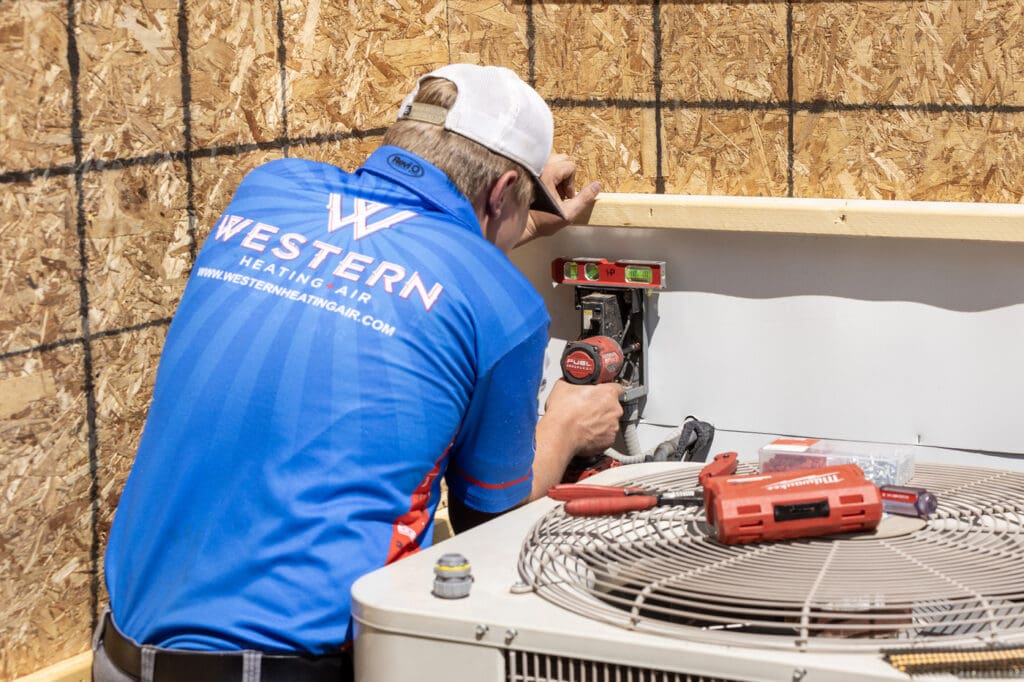
On arrival, the technician asks about symptom timing, breaker status, filter history, and any recent service. The outdoor unit is de-energized and opened to test the dual capacitor with a microfarad meter. The contactor is inspected for pitting and heat marks. The condenser coil is checked for fouling across the inner fins where clippings and fine dust lodge. The technician records compressor and fan motor amperage and compares both to data plate values. Refrigerant pressures are measured and paired with superheat and subcool numbers, then read against altitude-adjusted charts appropriate to the metering device. Indoors, total external static pressure is measured across the air handler or furnace with the evaporator coil, and the temperature split is checked across the coil. The condensate drain is inspected for blockages. Findings are presented with the repair options that solve the root cause, not just the symptom.
How Orem experience benefits Sandy homeowners
Western serves Utah County from Orem, dispatching from 235 S Mountain Lands Dr in zip code 84058. That service area includes Orem neighborhoods like University Parkway, the east bench, and the UVU area, plus adjacent communities across Pleasant Grove, American Fork, and Lehi. The altitude, dust load, and housing archetypes across Orem and north into Sandy are similar. The team spends much of July solving altitude-derated capacity stress, capacitor fatigue, and airflow restrictions from older return designs in 1950s to 1980s stock as well as modern tight-duct builds along newer corridors. That experience translates directly to faster, more accurate calls near South Towne where the same physics and part wear patterns apply.
Why some homes near South Towne need duct or return corrections to end emergencies
Many systems that fail each July have acceptable refrigerant charge and good electrical parts. They fail because airflow is out of design due to restrictive filters, undersized returns, or closed supply registers in rooms that homeowners have tried to isolate. Returning these systems to stable operation requires correcting static pressure by adding return capacity, upgrading to larger media filtration, and setting blower speed to match coil design. Western measures static before and after any change so the fix is documented. A system that drops from 0.9 inches of water column to 0.6 under high load gains enough margin to avoid a coil freeze or low-pressure trip that becomes an emergency call.
Smart thermostats and their role in emergency avoidance
Many homeowners near South Towne use Nest or Ecobee thermostats. Features such as early start, adaptive recovery, and aggressive setback schedules can lengthen run times in the hottest hours. When a system is near its altitude-reduced limit, those features can contribute to a peak-afternoon failure. Western calibrates thermostat settings to match system capacity at this elevation and verifies that staging or fan profiles do not work against airflow or charge targets. Paired with a clean coil and correct charge, better control settings reduce cycling and keep the system out of crisis in late July.
What matters during a compressor save-or-replace decision
When a compressor trips on thermal during a heat wave, the temptation is to condemn it on the spot. Sometimes that is the right call. Often it is not. Western checks run capacitor support, confirms voltage and contactor quality, verifies condenser fan motor speeds, cleans the coil if fouled, and rechecks head pressure and amperage. A compressor that returns to nameplate amp draw after these corrections is a save. A compressor that still runs over nameplate and fails a megohmmeter test between windings is a replace. A save avoids the most expensive emergency scenario. A replacement, when needed, is done with a line set flush or replacement, a new liquid line filter drier, brazed connections, and a charge verified by subcool at altitude so the new component lives a normal life.
For homeowners weighing repair versus replacement near South Towne
Repair is usually the right answer when a system is under 12 years old and the failure is isolated to a capacitor, contactor, fan motor, or a repairable leak. Replacement enters the discussion with cracked evaporator coils on older units, compressors that fail electrical tests, or systems that rely on severely restricted ductwork that cannot be corrected without major work. In those cases, a high efficiency replacement selected under Manual S, sized under Manual J, and checked against Utah State Energy Code minimums makes sense. Western also evaluates whether a heat pump conversion paired with Rocky Mountain Power programs and federal credits could improve total ownership cost compared to replacing like for like, especially for homeowners who plan long-term stays.
Quiet failure signs South Towne homeowners should not ignore
Several symptoms lead to emergency AC repair if they go unaddressed past June. A breaker that trips once under load is an emergency ac repair, ac repair services, ductless ac repair, home ac repair, ac repair company, 24 hour ac repair, amber warning. A condenser that starts slowly or needs a push on the fan blade is not fine just because it runs afterward. A temperature split that drops from 18 to 12 degrees during the first heat wave is a leak or a coil cleanliness warning. Condensate near the furnace or air handler indicates a drain restriction that will stop cooling on the next cycle. Western encourages homeowners to request a diagnostic as soon as these signs appear so repairs happen on routine rates with full parts availability rather than during a scramble on a 99-degree afternoon.
Emergency AC repair near South Towne for rental properties and HOAs
Property managers along the South Towne corridor know that overlapping tenant calls can arrive within the same hour during a heat spike. Western coordinates grouped dispatches to cover multiple units in one trip when possible and documents charge, airflow, and part condition for each system so that recurring issues are tracked rather than rediscovered with each visit. For HOAs, common issues include clogged condensate lines in shared chases and stacked filter maintenance lapses. Setting a seasonal service plan for spring reduces emergent visits in July and August and protects shared spaces from water damage due to overflow pans and secondary drain backups.
What separates a durable repair from a band-aid in Sandy
A durable repair near South Towne does three things. First, it restores system operation under design conditions by verifying refrigerant charge at altitude, electrical health, and airflow metrics. Second, it removes the cause of the failure, whether that is a fouled condenser, a high static return, or a leak at a flare or service valve. Third, it creates a maintenance path that keeps the system in spec through the hottest part of summer. A band-aid skips at least one of those steps. Western’s process is built around durable outcomes because the repeat visit in a week costs a homeowner more in time and money than doing the job right the first time.
How Western approaches parts sourcing during heat waves
During peak heat, local distributors along the I-15 corridor from Sandy to Midvale run low on common parts by midafternoon. Western stages high failure parts on service vehicles, including dual capacitors across the common microfarad ranges, condenser fan motors matched to popular frame sizes, contactors, and filter driers. When a specialty part is needed, the team checks multiple suppliers across the Wasatch Front, including Utah County locations, to locate stock. That broad network reduces wait times and avoids temporary fixes that require second trips. It also limits markups that occur when parts are scarce in a single market node.
Seasonal timing for Sandy homeowners who want to get ahead
The best results come from a spring visit that confirms the system is ready for altitude and heat. Western’s technicians target March through early May for condenser cleaning, charge verification at mild ambient with corrected targets, electrical testing, thermostat calibration, and static pressure checks. That timing mirrors the Orem service cycle, where spring AC maintenance across zip codes 84057, 84058, and 84097 prevents the compressor failures and capacitor burnouts that stack up across Utah County by July. Sandy homeowners near South Towne who schedule then avoid the most expensive version of AC repair and keep homes comfortable when demand peaks.
Conversion-focused next steps for homeowners near South Towne
Homeowners who want to avoid emergency AC repair costs near South Towne can take two steps. First, schedule a diagnostic or tune-up before the season peak so the system’s charge, airflow, and electrical health are documented and corrected. Second, use that visit to assess filter sizing and return capacity so high static pressure does not set up a midseason freeze or lockout. For systems already down, request a rapid diagnostic that reads refrigerant charge against altitude-adjusted targets, verifies microfarad readings, and measures static pressure before any major component is condemned. That sequence saves money and time.
Why Utah County and Sandy homeowners call Western for AC repair
Western Heating, Air and Plumbing serves the Wasatch Front from its Orem base at 235 S Mountain Lands Dr, Orem, UT 84058. The team handles AC Repair, Emergency AC Repair, Same Day AC Repair, AC Tune-Up, AC Maintenance, Heat Pump Repair, Ductless HVAC, Thermostat Installation, MERV Filtration Upgrades, and Commercial HVAC Service. Technicians are NATE certified and EPA Section 608 refrigerant certified. The company operates as a Utah Licensed HVAC and Plumbing Contractor, bonded and insured, and is BBB Accredited. That credential stack protects homeowners during emergency and routine calls alike.
For AC repair in Sandy UT near South Towne, Western offers rapid dispatch, altitude-aware diagnostics, and repairs that fix the cause, not just the symptom. To request service or schedule a seasonal diagnostic, call +1-385-526-3384 or visit https://westernheatingair.com/service-area/orem-ut/. Service hours support standard appointments, with rapid dispatch available during active HVAC emergencies across Sandy, Draper, Midvale, and Utah County communities including Orem 84057, 84058, and 84097.
Western Heating, Air & Plumbing provides HVAC and plumbing services for homeowners and businesses across Sandy and the surrounding Utah communities. Since 1995, our team has handled heating and cooling installation, repair, and upkeep, along with ductwork, water heaters, drains, and general plumbing needs. We offer dependable service, honest guidance, and emergency support when problems can’t wait. As a family-operated company, we work to keep your space comfortable, safe, and running smoothly—backed by thousands of positive reviews from satisfied customers.
Western Heating, Air & Plumbing
9192 S 300 W
Sandy,
UT
84070,
USA
231 E 400 S Unit 104C
Salt Lake City,
UT
84111,
USA
Phone: (385) 233-9556
Website: https://westernheatingair.com/, Furnace Services
Social Media:
Instagram |
Facebook |
BBB
Map: View on Google Maps